
A product designer with 4 years spent designing enterprise SaaS and AI products from 0 → 1. I love taking messy, complicated systems and turning them into something simple and lovely to use.
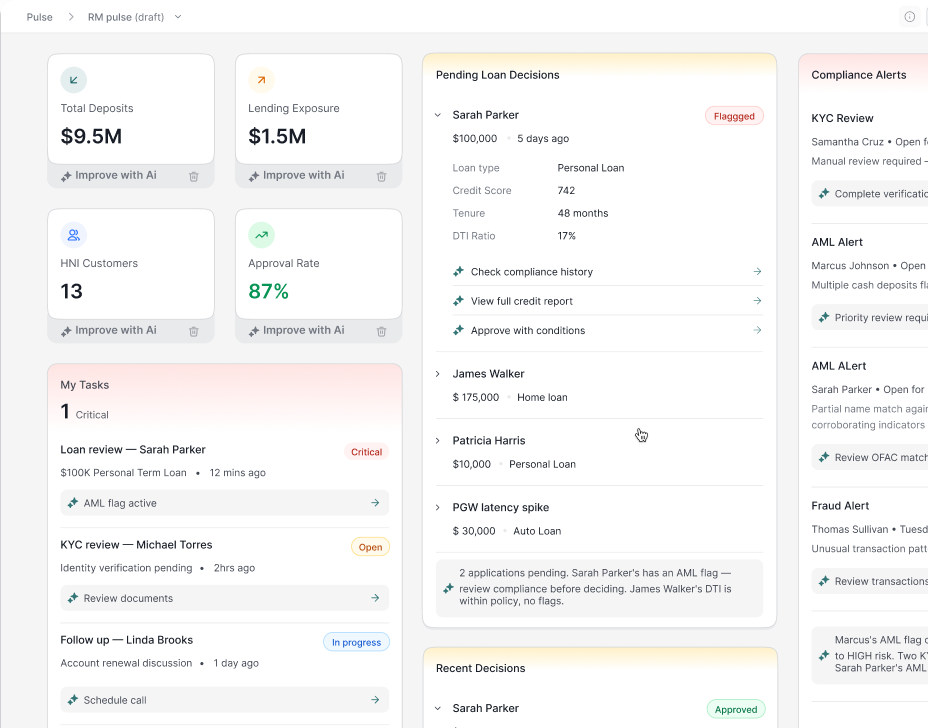
Right now I’m designing for Metafore, a San Francisco–based AI startup, that builds agentic systems to help large enterprises unify their scattered systems and deliver hyper-personalized & intelligent experiences at scale.
And when I finally close the laptop? You’ll usually find me drawing or making artsy little videos on the internet :D
Work
2025
Redesigned AI agents → 6x faster, 40% more adoptionUnifyapps
2024
Redesigned Payment pages → 4.3x increase in transactionsCosmofeed
2026
Publishing soon
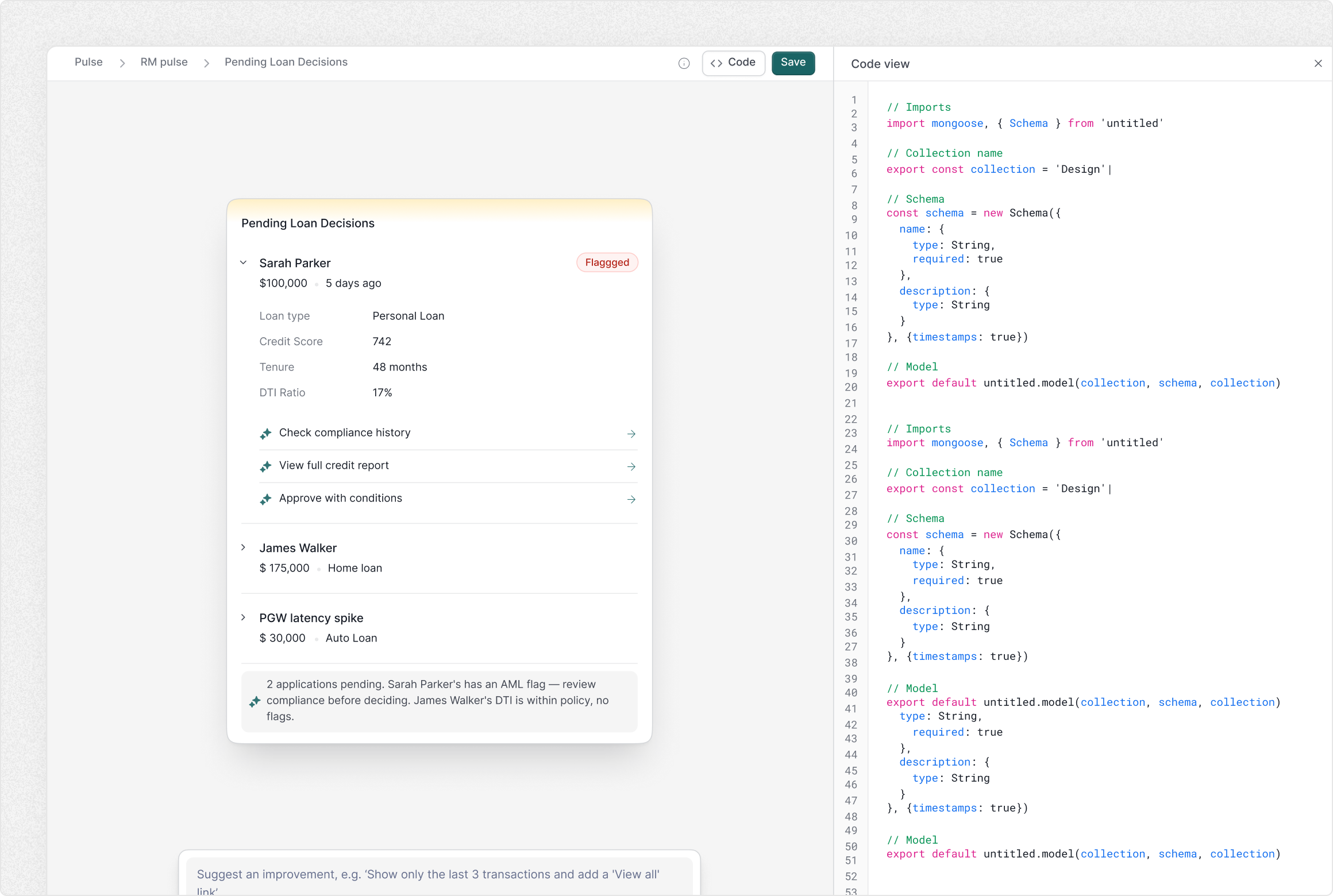
UI generation with Maker AIMetafore Publishing soon!
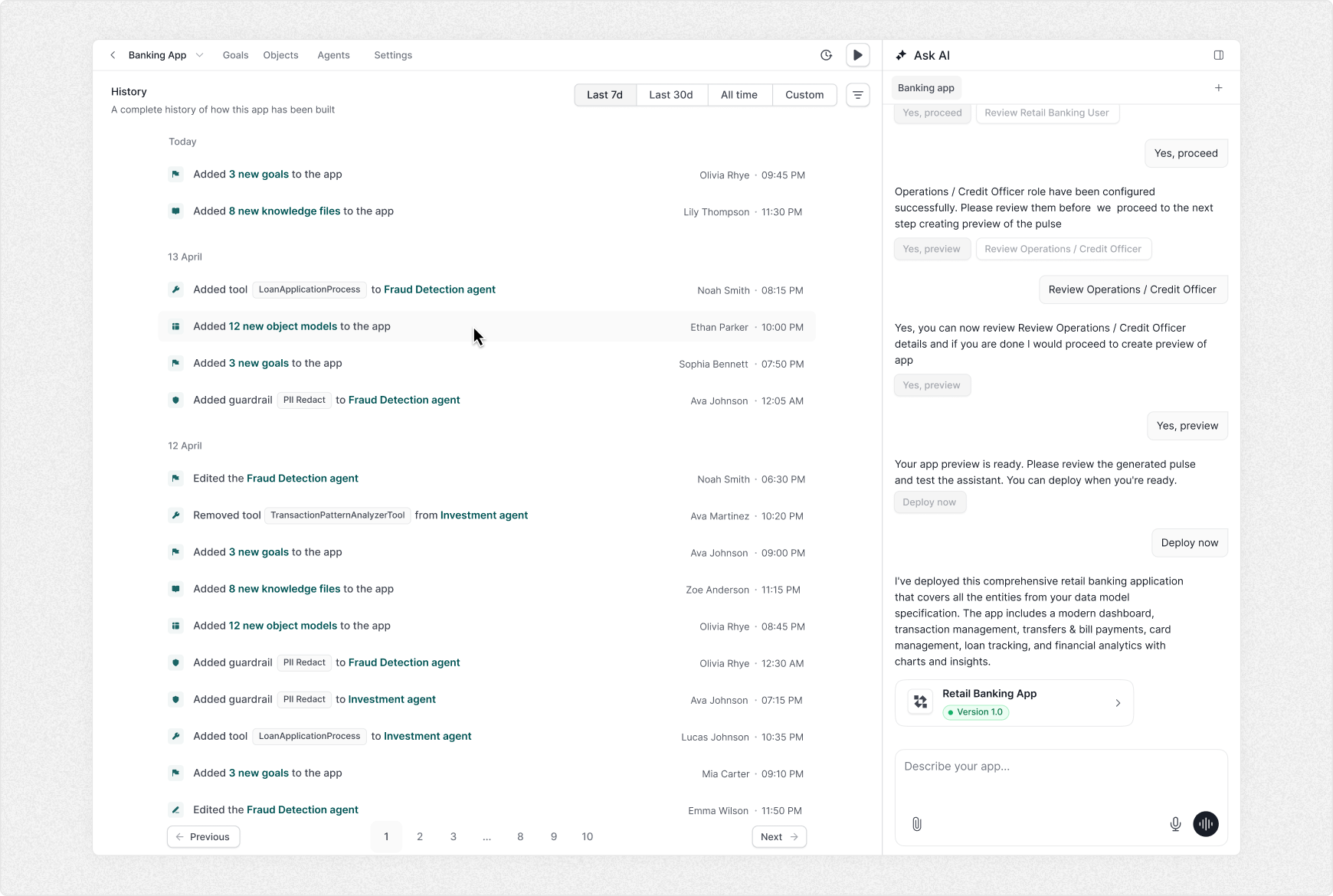
Designed several 0 → 1 features for the Metafore platform, and drove initiatives to automate design workflows and build agentic demo apps with Claude Code.
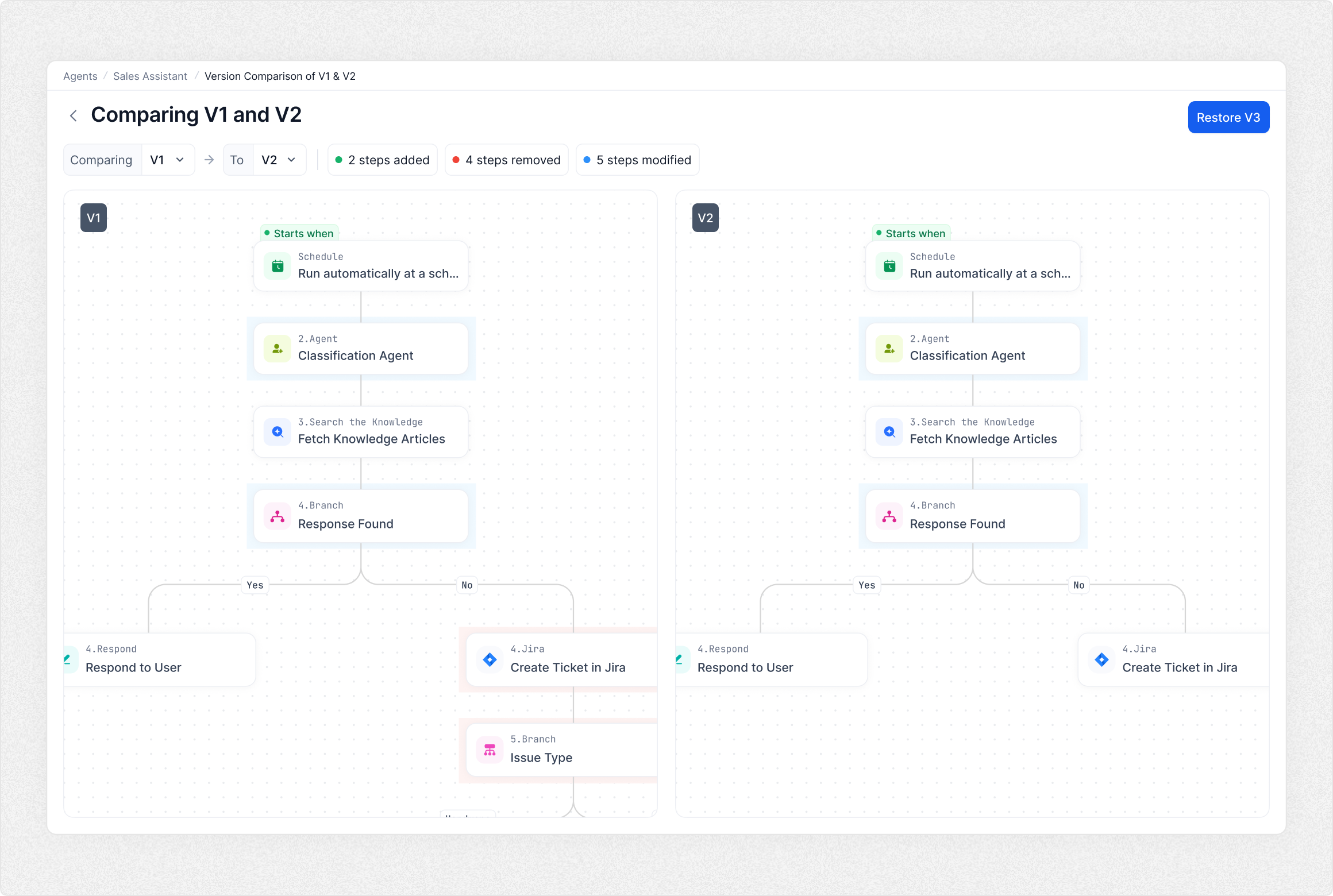
Worked as an embedded design team for Unifyapps. Designed their agentic AI suite from the ground up – AI Agents, Copilot, Enterprise Search, MCP, A2A servers etc.
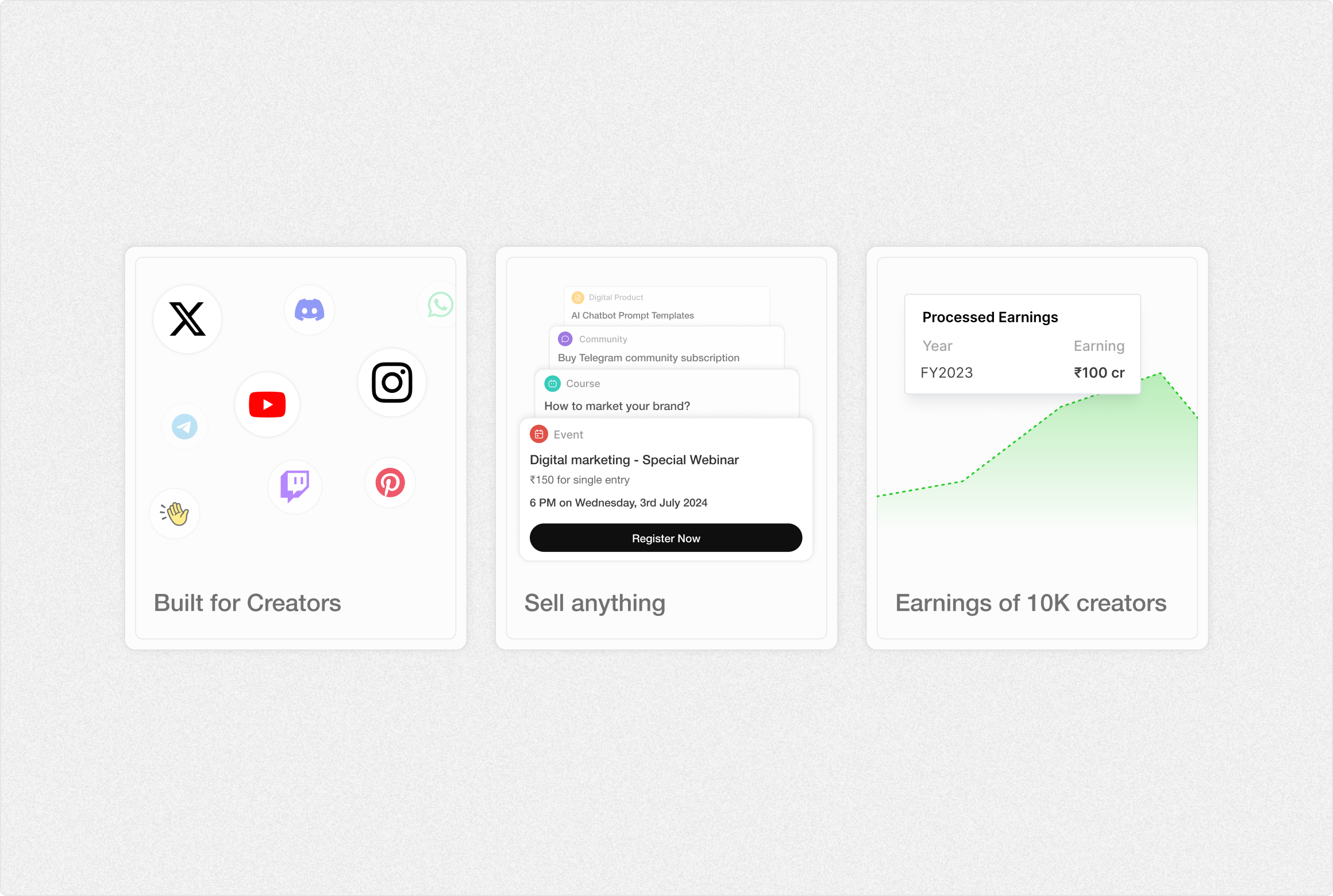
Owned and designed Cosmofeed’s platform from 0 → 1 including Payment Pages, Events, Telegram integration and more – from research and product thinking through to handoff.
Art & play
A little corner on the internet for all my creative stuff <3
I’ve been making things for as long as I can remember. I was always “The Art Kid” and I still am. This is my escape from adulting and everything else :)
About Me
Love hopping art galleries
Some quick facts about me
Hi, I’m Sugandha! I’m a product designer specialising in enterprise SaaS, dev, and AI tools. I’ve been designing for almost four years now, and I genuinely love what I do. Impact, creativity, and problem solving are just a few of the reasons I became a designer in the first place.
My journey into product design has been anything but linear. It started in the most unexpected way!
A few detours before design…
1
I was always the art kid – sketching, mandalas, pottery painting, rangoli and much more, but decided to pursue a much ‘safer’ option for my undergrad i.e. business management.
2
In college, I stayed close to the impact space. As part of EnactusHRC, I worked to provide sustainable menstrual care, generating employment for 20+ women and 15L+ in revenue.
3
I graduated from HR College with a Bachelor’s in Management Studies. Soon after, I started working at a marketing agency, but realised pretty early that it just didn’t float my boat.
4
So I quit. I began working as a part-time artist, taking commissions and teaching art and finally had the time to explore design. I taught myself everything and eventually cracked a product design job!
Where I am today…
That job turned into a career I’m proud of. Almost four years in, I’ve grown from someone teaching themselves the basics into a designer who’s shaped real products, and the way I work today looks nothing like where I started.
With AI reshaping everything, I believe in myself as a designer more than ever. The workflows have changed. I remember how boxed-in our careers used to feel, capped by what we could create on a canvas. But now, whatever we can imagine, we can actually build. That makes us the most powerful generation of designers to ever exist, and I can’t wait to see what lies ahead for us!
Enterprise SaaSDesign systems0→1 ProductsDetail obsessedCreative & artsyBuilding with AIClaude codeFigma MCP with Claude
How reducing setup time from 30 to 5 mins led to 40% higher adoption of AI Agents
RoleProduct Designer
TimelineJan - Feb 2025
TeamDesign manager, PM, CPO, CEO & I
About UnifyApps
UnifyApps is a fast-growing B2B SaaS startup building a GenAI-first enterprise platform. Its products enable companies to create GenAI apps, manage data, and automate workflows.
Phase I of Advanced AgentsAug 2024
When UnifyApps first launched AI Agents, the goal was simple: help enterprises automate workflows and deliver personalized experiences at scale. It gave technical teams deep control and flexibility, but at a heavy cost:
Setting up a single agent took 25–30 minutes
The flow had too many steps
It relied heavily on technical knowledge
For technical teams, it worked. But for business leaders, the very people who needed to see quick value, it became a barrier. Demo calls were high, but conversions and adoption stayed low.
The Problem
Advanced Agents was powerful but too technical, time-consuming, and taxing. Conversions & adoption stalled because the product didn’t support non-technical teams or guide users through the setup process.
Why this problem mattered for Unifyapps?
Unifyapps recently raised $20M to distribute AI Agents to enterprises.
AI Agents is a core strategic product which directly impacts company’s revenue and market positioning in the AI race.
Fixing usability was critical to client adoption.
Phase II: Dubai SprintJan 2025
By Jan 2025, leadership pressure had reached its peak. The goal was clear: AI Agents had to become radically simpler. Within three days, we were on a flight to Dubai for an intense 3 week sprint with the C-suite.
To address both ends of the user base, we decided a dual model:
Simple Agents: newly introduced for non-technical teams, designed for minimal setup to serve enterprise’s small use cases.
Advanced Agents: retained for the 20–25% of complex use cases where technical teams needed deep customization and control.
Fluid Interface
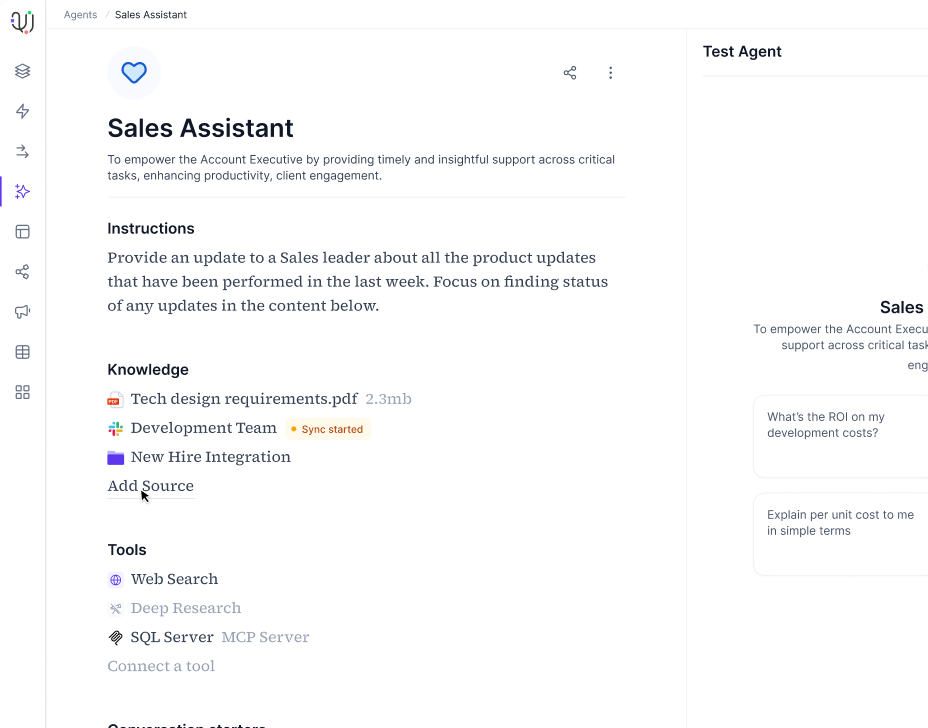
Inspired by Medium and Google Docs, we reimagined simple agent creation as a document-like interface — fluid, conversational, and far less intimidating. Instead of filling rigid forms, users could simply ‘write out’ their ideas naturally, almost like drafting an essay.
This shift turned what had been a 30-minute technical process into something fast, intuitive, and empowering!
Solving for 3TsTechnical, Time-consuming & Taxing
1. Technical
Since AI is still a relatively new industry, many users are unfamiliar with its patterns and technical jargons.
For Simple Agents, we focused on simplifying the experience by minimizing jargon and using clear, user-friendly language.
2. Time-Consuming
In Advanced Agents, users had to navigate a lengthy form with too many configuration steps. Many felt it was time-consuming, especially when they just wanted to spin up a quick agent.
For Simple Agents, we streamlined the journey by:
Introducing a split-screen view for quicker configuration and testing
Adding ‘Generate with AI’ to instantly draft instructions and conversation starters, saving users time
Keeping only the essential settings required for creating a simple agent
This reduced friction, saved time, and made the flow feel significantly faster!
3. Taxing & Intimidating
Many users described Advanced Agents as intimidating and overwhelming.
For Simple Agents, our goal was to make the experience feel as natural as writing a document or mapping out the workflow they envisioned for their agent!
What Changed in Numbers?
Setup time dropped from 30 minutes → 5–6 minutes
Adoption per enterprise grew by 40%, driven by business leaders for the first time
The product played a direct role in closing major six figure deals with multinational beauty and retailer brands
What People Said
The CPO called Simple Agents one of the ‘pride products’ of the company.
During a demo, Hamza Tahan, Head of Operations at Evvolve & Partners LLC, described it as:
Reflection
This project was a turning point for me as a designer. It wasn’t just about simplifying an interface — it was about reframing how people interact with AI.
We didn’t play it safe. Instead of tweaking forms, we experimented with a document-like interface — a format we’d never tried before and weren’t sure could handle complex flows. But stepping outside the familiar was exactly what made the breakthrough possible.
What I learned is that sometimes adoption requires courage to break patterns. By moving beyond convention, we made AI Agents not just powerful for technical teams, but approachable for business leaders too.
And in the end, that’s what mattered most: turning something intimidating into something empowering!
How the redesign led to 4.3x increase in transactions for Payment Pages
RoleProduct Designer
TimelineJan - Feb 2023
TeamSole designer
About Cosmofeed
Cosmofeed is a Forbes recognised startup that allows creators to build, manage, and monetize their online business. It has processed earnings of Rs 100 crore for over 5,000 creators in FY23.
Introduction to Payment Pages
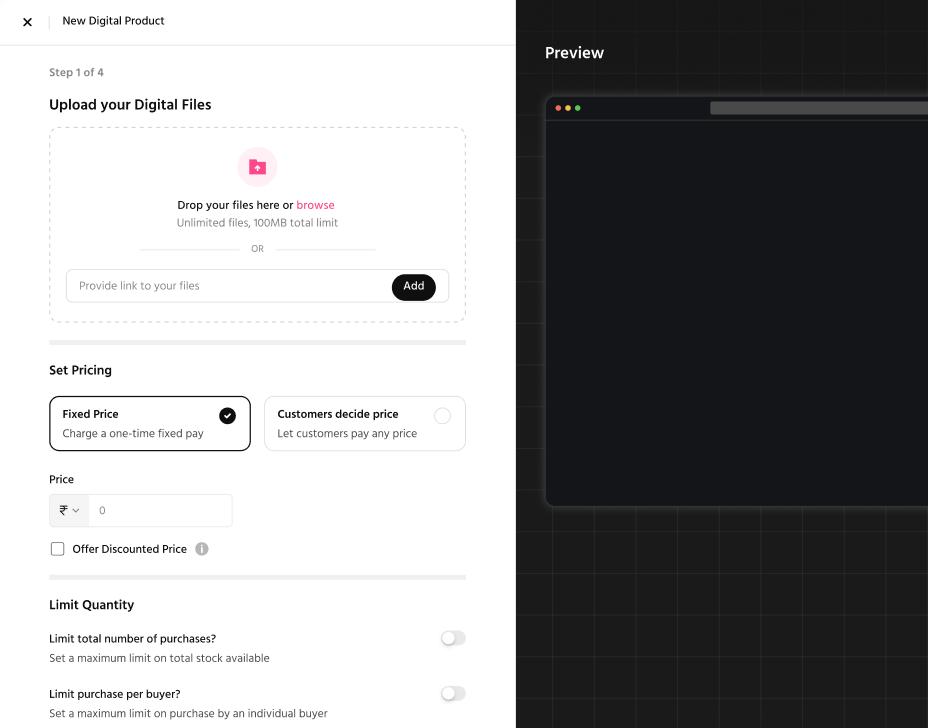
Cosmofeed Payment Pages is a tool designed to help creators & small businesses create and customize payment pages and sell digital products.
It was designed and implemented within the span of 1 week to learn from the market and iterate. In just 6 months, the product became the highest-revenue-driving tool for Cosmofeed, despite lacking a good experience!
Redesign was required because…
We were receiving majority of the support tickets for this product.
The product became the priority for business growth and there were a lot of gaps in its experience and flow!
Product Goals to achieve through redesign…
Improve navigation and layout
Rethink certain use cases and features and optimize the experience for our target audience
Make the design scalable for the future
Redesign the UI elements to fit the new branding
Main goal of the users: To sell products and make money online by creating highly convertible payment pages.
Research
Due to a time crunch, I relied mainly on internal research: I spoke to Business Development and Customer Support team, checked out existing Payment Pages and did Competitive Analysis.
What did we find after all?
Several features were not being used at all or were being misunderstood — like goal tracker, activate sales, etc.
There was a steep rise in the number of frauds due to unfulfilled orders.
Payment Page became an easy tool to sell illegal stuff.
Catalog — a feature that allowed users to list multiple products on a single page (like an e-store), was not being used as much as we expected.
There was a lack of customization in the look & feel of the page and the content it presents.
Addressing the concerns
1. Optimizing as per User Goals
Payment Pages was trying to cover several use cases without optimizing it for the direct target audience.
For the redesigned version, we went back to the basics and adjusted our product strategy to focus on our direct users first.
Currently, it includes only Exit Intent popup feature, but in the next few months, we will be adding new features such as bump offer, cross-sell/upsell and countdown.
2. Addressing Unethical Activities
Frauds:
That’s why we decided to discontinue physical products as a type until we integrate a shipping service solution.
Product Policies:
Entering product policies was an important step while creating a Payment Page. It helped in maintaining transparency between the creators and the buyers and thus, reduced the frauds.
We increased the visibility of entering product policies so that buyers can learn about refunds and fulfilment directly from the creators.
Sale of illegal items:
Another major concern was the sale of illegal stuff. To deal with this, we made our Terms and Conditions clearer and gave creators easier access to them.
We also talked to the support team to strictly review the pages and suspend them if needed.
3. Promoting Customisation & Flexibility
Earlier, the only customisation that Payment Pages allowed was change in color and dark theme.
With the revamped version, we aim to make Payment Pages more flexible in terms of color, aesthetics, content and layout.
4. Dealing with Catalog
This feature was introduced in March 2023 when the team felt a demand for the ability to list multiple products on a single payment page. However, it fell short of our expectations.
Due to these reasons, we decided to discontinue the Catalog feature in our revamped creation flow.
We gave it a separate entry point in the pre-creation process and will test how the feature performs for some time. Depending on its performance, we may either remove it entirely from the Payment Page or consider its inclusion in the future.
5. Improving Layout and making Design Scalable for the future
From what I learned through the research, creators found it difficult to navigate the creation flow. One had to explore the entire flow several times to get the hang of where features are located!
With the revamped version, the goal was to simplify the flow & IA and make sure the design is highly-extensive for future updates!
This is what we ended up with!
Now let’s talk numbers!
The redesigned version was launched in August 2023, and we tracked the product performance for 2–3 months.
No. of transactions: In just 2 months, Payment Pages transactions increased from 28,000/month to 150,000/month, which is almost a 4.3x increase.
Amount transacted on Payment Pages: Amount transacted on Payment Pages by the users increased by 8x in 2 months!
Support tickets: Number of support tickets for Payment Pages declined substantially by 70%.
Feedback received from the team
‘After the redesign, we have seen people coming on Payment Pages organically a lot, which was not the case earlier’~ Creator Acquisition Specialist
Major Platform Update
Stakeholders and the team loved the layout and UI of the redesigned version so much that we have now decided to make this creation flows’ layout common for all 5 of our products (Events, Courses, 1-on-1, etc.).
I think I can safely say that this project was a big hit for Cosmofeed and I :) Payment Pages has also maintained its position as the highest-revenue driving tool for us! (as of Dec. 2023)
Reflection
Revamping Payment Pages was a very special and important project for me & Cosmofeed. It feels like the onset of a new journey!
I have learned the nuances of the product design industry and how creating a product is such a collaborative process. It can never be done in isolation, and how I needed to communicate and align/realign with all the stakeholders at every step of the way!
I also understood the importance of delivering designs at speed for a startup. In a perfect world, I would have conducted usability testing, or launched for beta testing, or gone out and talked to people first, but oh well, I wish timelines were favourable for the same!
How reducing setup time from 30 to 5 mins led to 40% higher adoption of AI Agents
RoleProduct Designer
TimelineJan – Feb 2025
CompanyUnifyapps
TLDR
It should feel as simple as writing in Google Docs. It should feel like magic.
That’s what Unifyapps’ CEO told me in Jan 2025, when I flew to Dubai for an intense sprint with the C‑suite stakeholders.
We had first launched AI Agents in Aug 2024 after a fast‑paced 1 month sprint. The tool was powerful but designed mainly for technical teams. Setting up an agent took nearly 30 minutes, leaving non technical users intimidated — resulting in lots of demo calls but low conversions & adoption.
A few months later, Unifyapps raised $20M to distribute AI Agents and position itself as a leading AI‑first enterprise platform. With that investment, making the product faster, simpler and accessible became critical.
That urgency led to Phase II, a radical redesign to make agent creation effortless. In Dubai, we worked side by side with the CEO and leadership team, iterating live. The result?
01
40% AdoptionAdoption grew by 40%, led by business leaders
02
80% FasterSetup time dropped from 30 mins to 5
03
6‑Figure DealsHelped close 6‑figure deals with MNCs
How the redesign led to 4.3x increase in transactions for Payment Pages
RoleProduct Designer
TimelineJan – Feb 2023
CompanyCosmofeed
TLDR
Payment Pages was initially launched in Dec. 2022 as an MVP version. In just 6 months, it became the Highest‑Revenue‑Driving product for Cosmofeed (among 4 other products). The product was far from perfect; however, we saw a huge potential in the market.
Later, I was given the task of redesigning the creation flow, which not only provides a good experience but also fits the new branding.
Here’s what we were able to achieve within 2 months of the redesign: